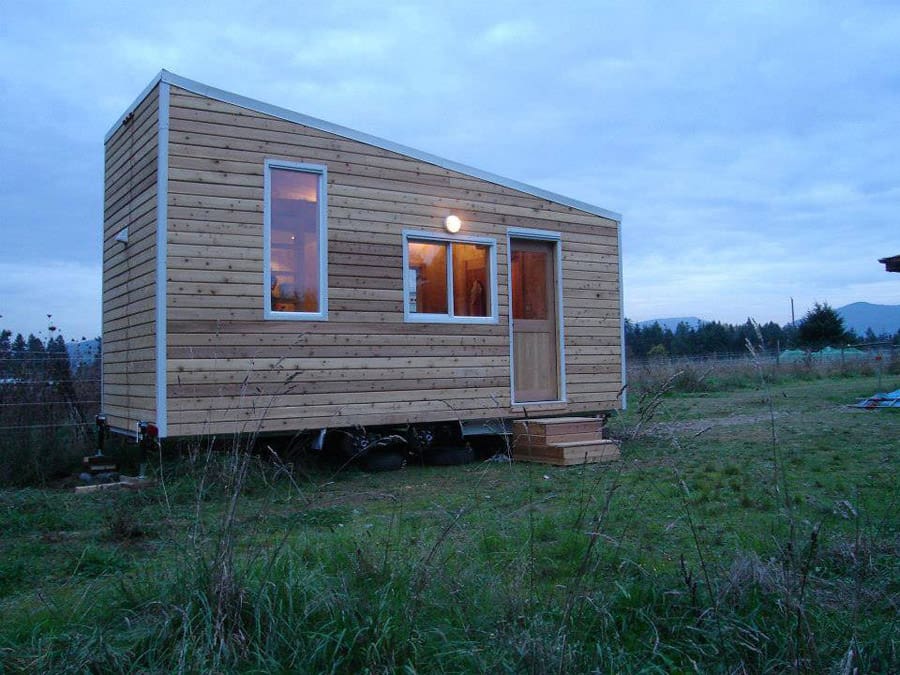
Chemical free?! That’s not just good architecture, it’s a Nobel Prize-worthy miracle of science! From what anti-universe was this tiny house birthed? And how did the builders interact with it without being completely annihilated?
This is why Intro to Chem teachers should collect students’ phones before class. Back to your textbook, sonny, and my sympathies on your inability to scroll. Don’t laugh at scrolling impairment, folks, it’s a terrible way to go through life.
My thoughts exactly! Too bad that every time it rains, it will become saturated with that pesky H2O 😉
Psssst! EVERYTHING is chemicals! Absolutely EVERYTHING! All matter in the universe is “chemicals.”
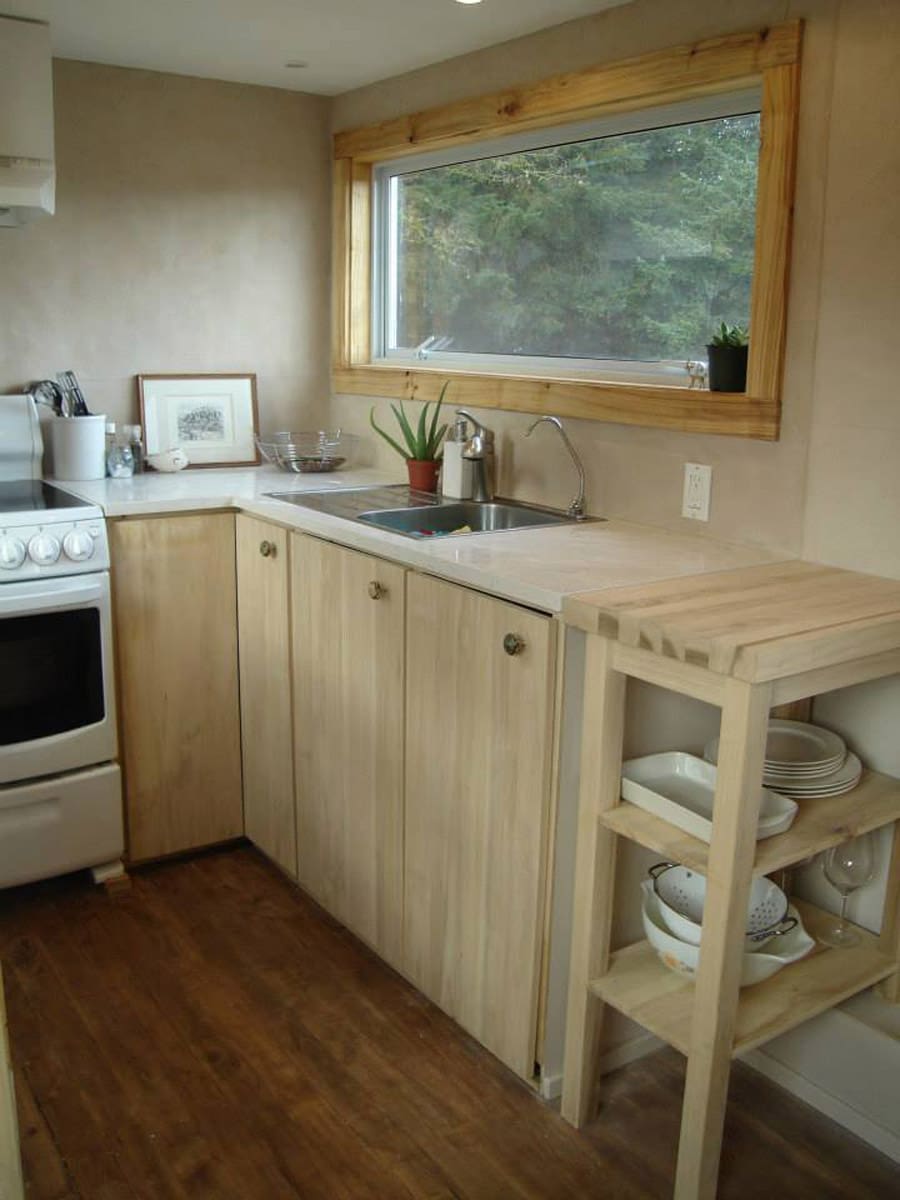
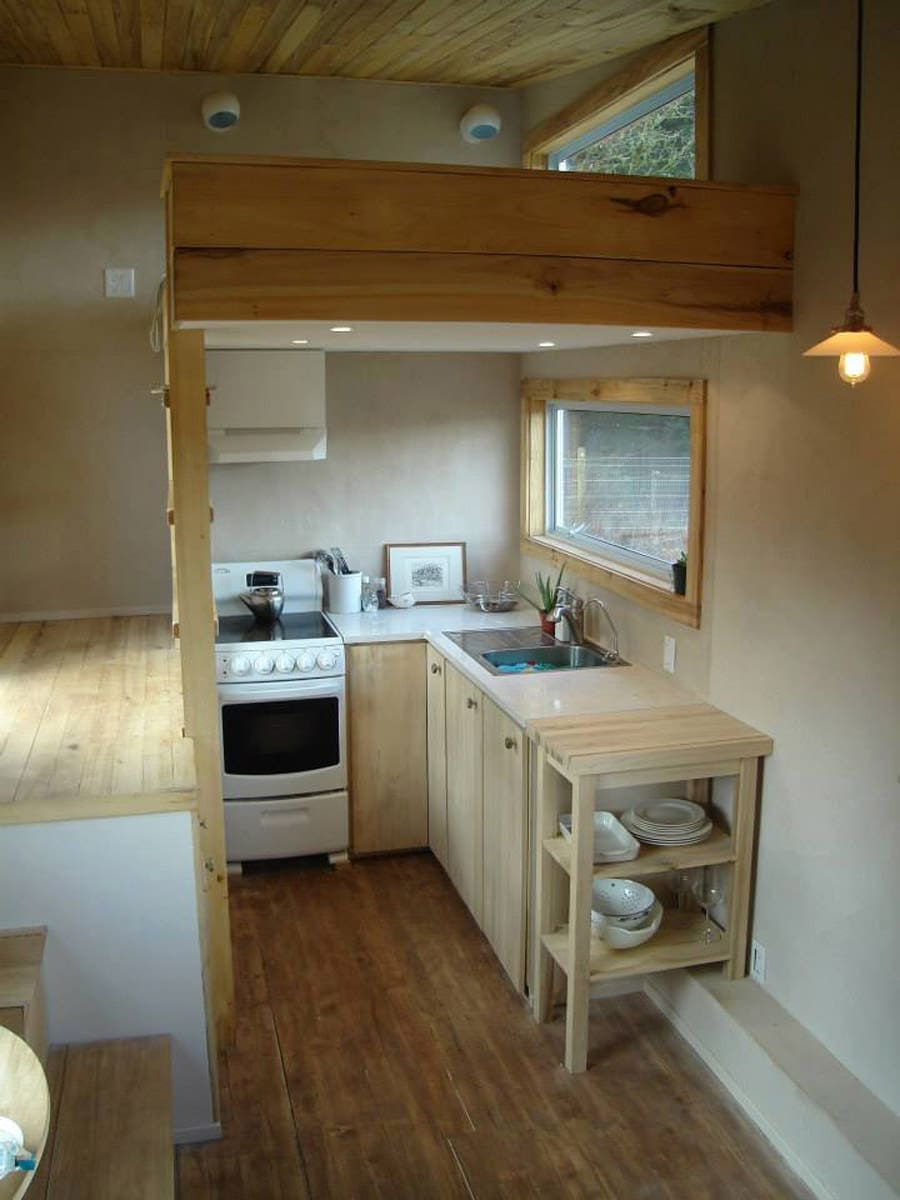
And I see some rather noxious ones in your picture. I see plywood (glues, resins), plastic (stove, refrigerator, electrical outlets, light fixtures, windows), cutting board (glue), light bulbs (mercury, lead), Wiring (noxious insulation and fire retardants) Halogens (cooktop), refrigerants (Refrigerator, air conditioner), Sink (Stainless Steel is made from Chromium and Nickel which are toxic) and an air conditioner/heat pump which is full of nasty.
So I guess what they’re really saying is they didn’t use any wood stain or paint. Two things that can be pretty benign in comparison.
Hey Douglas – Check out the dude’s website, he’s not messing around. Chemical-free is just shorthand, what he means is eliminating as much of the toxic chemicals that he’s sensitive to as possible.
It was pleasure building this home and even more so that the owner is experiencing better health. We drastically reduced the amount of chemicals and EMF’s than a conventional building. The Facebook page (https://www.facebook.com/chemicalfreetinyhouse) and blog (http://mychemicalfreehouse.blogspot.ca/) have more details for those interested.
Douglas,
how about being less of a jerk? Yes, technically everything is chemicals, but that is not how the work is used by the vast majority of the population. If you take the time to go on the linked website you will find out that the owner of the house has put considerable thought into what kind of materials to use. Obviously not everything can be bought “natural”, kinda hard to get wires without plastic. Her concerns also seem to be with materials that don’t give of fumes, not with not using anything artificial at all. So metals locked inside a lightbulb is hardly an issue.
But then looking into that and thinking about it would have taken time. Time you rather spent on writing an unfriendly comment. Try to be a bit more constructive next time.
Well, Douglas, it’s technically correct that everything, including water, is a chemical, but what the author was referring to was non-toxicity, and if you’d bothered to click through to the blog she has on her house, you’ll see that she has multiple chemical sensitivities, that she took immense trouble to construct a place that would not make her ill, and was civic-minded enough to try to help inform other people about what she had learned along the way.
Your snarky dismissal is based on, for one thing, your erroneous assumption that you’re looking at plywood (it’s poplar, and the walls are a “cementitious” board that’s less toxic than drywall), and for another, misunderstanding of the aim of the house, which was to have somewhere to live that did not secrete fumes that would be toxic to the owner. If that stove is there, it’s because it doesn’t make her react.
In fact, you might want to abandon quick once-over diagnoses before leaving snide comments, since your eye could not pick up the immense amount of work that went into wrapping the wiring, insulating the walls, building a mould-proof shower, using steel plates in the floor, finding special adhesives, etc. You just end up with egg on your face, and you know how it makes you break out after repeated exposure.
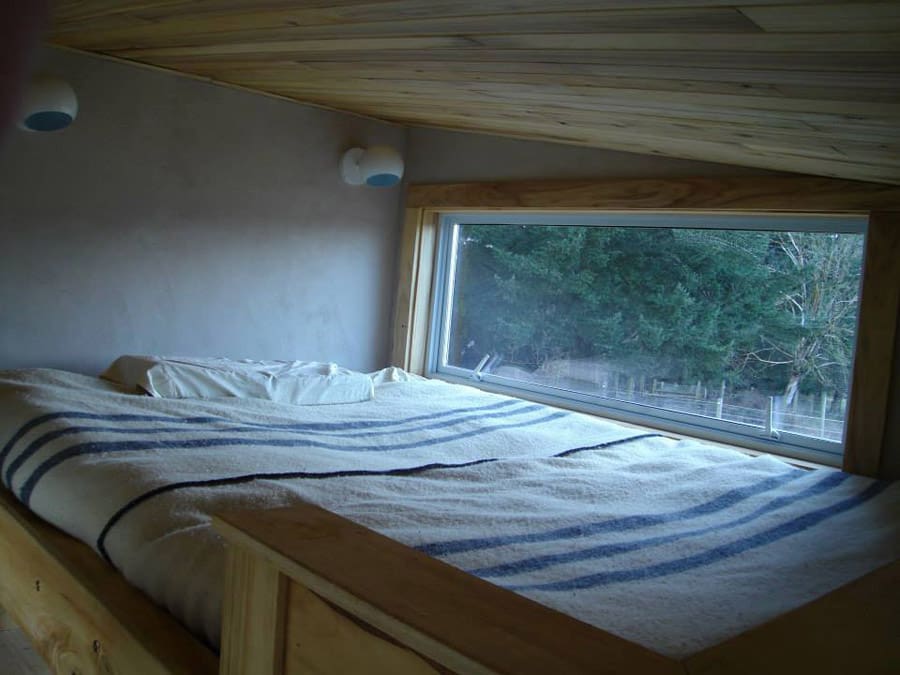
I don’t have bad reactions to chemicals (I’m using that in the conventional, non-smarmy sense) as a rule, but avoiding toxic gasses where you can seems like a good idea to me. This is also a beautiful little house with well-used space (the half stair/half ladder loft solution, for example), so kudos to the owner for making such a lovely thing.
Or maybe it is possible to be critical of the “chemical-free” label and also appreciate the alternative building methods at the same time. The client’s sensitivities are a non-sequitur, and don’t justify the misuse of language.
Nobody is arguing against avoiding toxic substances, so I’m not sure what you are trying to defend.
This. So much this.
No one is claiming certain people can’t have sensitivity to certain chemical compounds. But to title something “Chemical free” is nonsense.

 Butch Bauer


http://www.smbc-comics.com/?id=3324
Chemical free?! That’s not just good architecture, it’s a Nobel Prize-worthy miracle of science! From what anti-universe was this tiny house birthed? And how did the builders interact with it without being completely annihilated?
This is why Intro to Chem teachers should collect students’ phones before class. Back to your textbook, sonny, and my sympathies on your inability to scroll. Don’t laugh at scrolling impairment, folks, it’s a terrible way to go through life.
My thoughts exactly! Too bad that every time it rains, it will become saturated with that pesky H2O 😉
Psssst! EVERYTHING is chemicals! Absolutely EVERYTHING! All matter in the universe is “chemicals.”
And I see some rather noxious ones in your picture. I see plywood (glues, resins), plastic (stove, refrigerator, electrical outlets, light fixtures, windows), cutting board (glue), light bulbs (mercury, lead), Wiring (noxious insulation and fire retardants) Halogens (cooktop), refrigerants (Refrigerator, air conditioner), Sink (Stainless Steel is made from Chromium and Nickel which are toxic) and an air conditioner/heat pump which is full of nasty.
So I guess what they’re really saying is they didn’t use any wood stain or paint. Two things that can be pretty benign in comparison.
Hey Douglas – Check out the dude’s website, he’s not messing around. Chemical-free is just shorthand, what he means is eliminating as much of the toxic chemicals that he’s sensitive to as possible.
It was pleasure building this home and even more so that the owner is experiencing better health. We drastically reduced the amount of chemicals and EMF’s than a conventional building. The Facebook page (https://www.facebook.com/chemicalfreetinyhouse) and blog (http://mychemicalfreehouse.blogspot.ca/) have more details for those interested.
Douglas,
how about being less of a jerk? Yes, technically everything is chemicals, but that is not how the work is used by the vast majority of the population. If you take the time to go on the linked website you will find out that the owner of the house has put considerable thought into what kind of materials to use. Obviously not everything can be bought “natural”, kinda hard to get wires without plastic. Her concerns also seem to be with materials that don’t give of fumes, not with not using anything artificial at all. So metals locked inside a lightbulb is hardly an issue.
But then looking into that and thinking about it would have taken time. Time you rather spent on writing an unfriendly comment. Try to be a bit more constructive next time.
Well, Douglas, it’s technically correct that everything, including water, is a chemical, but what the author was referring to was non-toxicity, and if you’d bothered to click through to the blog she has on her house, you’ll see that she has multiple chemical sensitivities, that she took immense trouble to construct a place that would not make her ill, and was civic-minded enough to try to help inform other people about what she had learned along the way.
Your snarky dismissal is based on, for one thing, your erroneous assumption that you’re looking at plywood (it’s poplar, and the walls are a “cementitious” board that’s less toxic than drywall), and for another, misunderstanding of the aim of the house, which was to have somewhere to live that did not secrete fumes that would be toxic to the owner. If that stove is there, it’s because it doesn’t make her react.
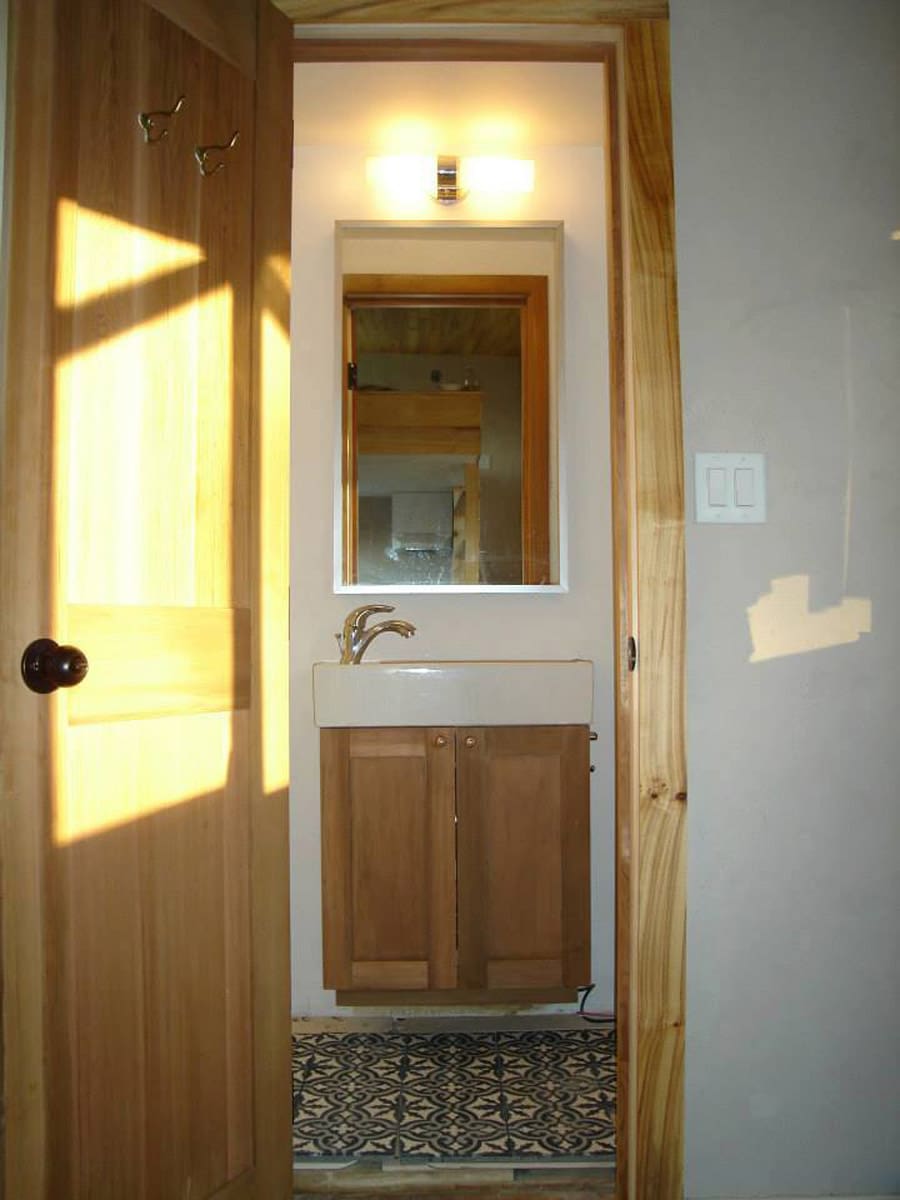
In fact, you might want to abandon quick once-over diagnoses before leaving snide comments, since your eye could not pick up the immense amount of work that went into wrapping the wiring, insulating the walls, building a mould-proof shower, using steel plates in the floor, finding special adhesives, etc. You just end up with egg on your face, and you know how it makes you break out after repeated exposure.
I don’t have bad reactions to chemicals (I’m using that in the conventional, non-smarmy sense) as a rule, but avoiding toxic gasses where you can seems like a good idea to me. This is also a beautiful little house with well-used space (the half stair/half ladder loft solution, for example), so kudos to the owner for making such a lovely thing.
Or maybe it is possible to be critical of the “chemical-free” label and also appreciate the alternative building methods at the same time. The client’s sensitivities are a non-sequitur, and don’t justify the misuse of language.
Nobody is arguing against avoiding toxic substances, so I’m not sure what you are trying to defend.
This. So much this.
No one is claiming certain people can’t have sensitivity to certain chemical compounds. But to title something “Chemical free” is nonsense.